Digital Payments in India: From UPI to a Cashless Economy: NewsSphereX
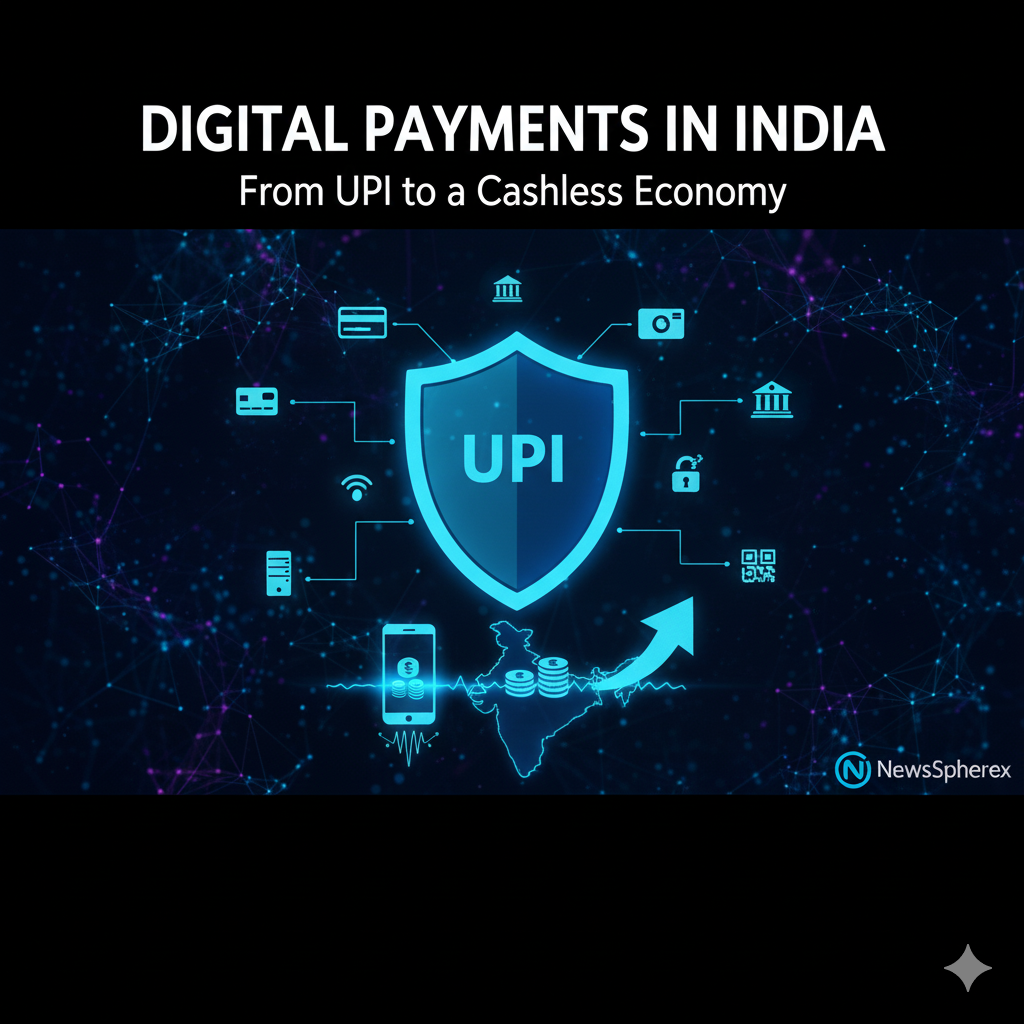
India has rapidly emerged as a global leader in digital payments. From bustling metros to small towns, people are embracing UPI, mobile wallets, and fintech apps to pay for everything from groceries to government services. The digital payments revolution in India is driving the country toward a cashless economy.
📲 The Rise of UPI
The Unified Payments Interface (UPI) launched in 2016, transformed digital payments in India by enabling instant, free, and secure money transfers using smartphones.
- Over 10 billion transactions processed monthly (2025 stats).
- Adopted by major apps like Google Pay, PhonePe, Paytm, BHIM.
- UPI Lite enables small-value offline transactions.
✅ Benefits of Digital Payments in India
1. Convenience
Cashless transactions save time and effort for both businesses and consumers.
2. Transparency
Digital payments reduce black money circulation and increase financial accountability.
3. Financial Inclusion
Millions of unbanked citizens gained access to banking through digital wallets and UPI-linked accounts.
4. Boost to Economy
Small businesses and street vendors benefit from cashless options, driving growth.
⚠️ Challenges
- Digital literacy gaps in rural areas.
- Dependence on internet and smartphone availability.
- Cybersecurity threats and fraud risks.
🔮 Future of Digital Payments in India
India’s future is undeniably digital. Initiatives like CBDC (Central Bank Digital Currency), biometric payments, and integration with global systems will further strengthen India’s digital payment ecosystem.
✨ Final Thoughts
The story of digital payments in India is one of innovation, inclusion, and transformation. From urban malls to village markets, the shift toward a cashless economy is redefining how India transacts, making it a global example in fintech adoption.





Post Comment